

👋 This is another in a series of monthly posts investigating books that have influenced my writing. In case you missed them, you can read some of the previous ones here:
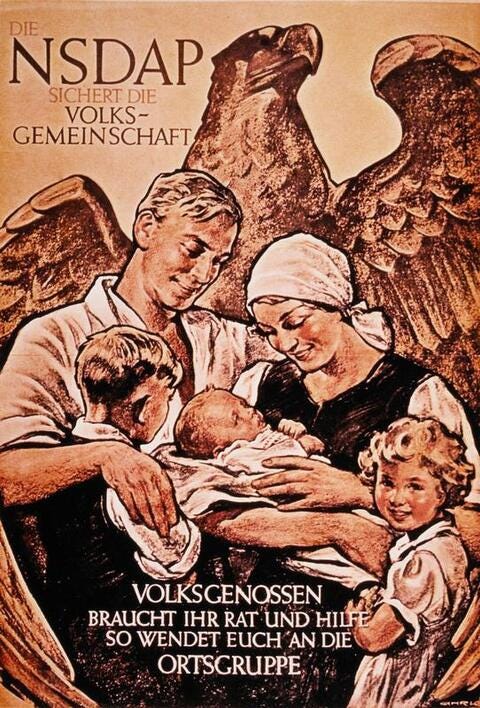
It was the year of an election. Two million brownshirts took to the streets, devoted to defending the interests of their burgeoning NSDAP party. Every instigated clash with Communist and Social Democrat paramilitary units on the streets of Berlin was then used as evidence by NSDAP deputies for the country’s dire need for a strong authoritarian leader to quell the chaos. Namely, their strong authoritarian leader. A single month of campaigning saw over 300 deaths and 1,000 injuries.
To construct a functioning government, President von Hindenburg was pressured to side with one of the two challenger parties with rapidly growing bases: the Communists (KPD), with their platform of social reform and wealth re-distribution; or the Nazis (NSDAP), with their platform of isolationism and staunch anti-immigrant nationalism. Underestimating their leader and influenced by conservative elites, Hindenburg aligned himself with the NSDAP and, in January 1933, Hitler was appointed Chancellor of the Weimar Republic.
On February 27, the Reichstag was set on fire. Hitler blamed Marinus van der Lubbe, a Dutch Communist, and through the Reichstag Fire Decree suspended basic rights and facilitated the mass arrests of KPD members and deputies.
On March 5, following a campaign of violence and intimidation, the NSDAP secured a parliamentary plurality of 43.9%.
On March 22, the Dachau concentration camp opened to house more than 200 incoming political prisoners, most of whom were communists and social democrats.
On March 23, with KPD deputies having already been arrested or expelled, brownshirts filled the temporary Reichstag to intimidate deputies into voting in the Enabling Act, allowing Hitler to issue laws without parliamentary consent. They secured a two-thirds vote from the remaining deputies who had not been arrested or expelled, establishing an effective dictatorship and marking an end to the Republic.
In July, the Law Against the Formation of Parties was enacted and in November, another parliamentary election was held. There was only one party on the ballot.
One year earlier, an election was held in the United States, where 1 in 4 Americans were out of work, 1 in 3 farmers had lost their land, and 9,000 out of 25,000 banks had gone out of business. Herbert Hoover championed American national individualism and self-reliance, warning that radical proposals would lead to socialism. Franklin Delano Roosevelt promised recovery through his “New Deal” program. Roosevelt won in a landslide. As war ravaged Europe, tensions mounted within a country focused on finding its footing in the wake of the Great Depression on their role in the conflict.
In February 1939, more than 20,000 people attended a pro-”Americanism” rally in Madison Square Garden, scheduled to coincide with George Washington’s birthday. The mood was jovial. A marching band played as the attendees took their seats. An enormous portrait of Washington stood on stage. The rally began with a rendition of “The Star-Spangled Banner.” And then, the organizing body’s national secretary took stage.
“If George Washington were alive today,” he boomed, “he would be friends with Adolf Hitler.”
In the hours that followed, his fellow Americans were called upon to restore America to “True Americans.” The audience was warned against “Jewish world domination” and blamed the “oriental cunning of the Jew Karl Marx-Mordecais for the class warfare felt across the country.”1
And in all of this chaos, another figure. An aviator.
In May 1927, a pilot named Charles Lindbergh flew from New York Paris nonstop, the first ever solo transatlantic flight. President Calvin Coolidge presented him with both the Distinguished Flying Cross and the Medal of Honor. He was named Time magazine’s Man of the Year.
In 1930, President Hoover awarded him the Congressional Gold Medal.
In 1932, Lindbergh’s first-born infant child was kidnapped and murdered, a high-profile crime that captured the public’s attention. The international fame and admiration became near-mythic adoration.
In 1937, Lindbergh praised German aviation as being “without parallel.” He praised Germany’s “sense of decency and value” as being far ahead of “those of America.”
In 1938, Herman Göring, the head of the Luftwaffe, awarded Lindbergh with the Service Cross of the Order of the German Eagle with the Star.
Also in 1938, the first Kindertransport train arrived in Harwich, England. In total, nearly 10,000 children would be saved by the program, most of whose entire families would perish in the camps.2
In 1939, the MS St. Louis carried over 900 Jewish refugees to America fleeing Nazi Germany. They were denied entry and turned back to Europe. Over 250 of them were murdered in the Holocaust.
In 1940, Lindbergh became a prominent spokesperson for the America First Committee, an isolationist political group advocating against the United States’s entry to the Second World War.
In 1941, he delivered a speech titled “Who Are the War Agitators?” at an America First rally in which he named: “the British, the Jewish, and the Roosevelt Administration.” American Jews, he said, had “large ownership and influence in our motion pictures, our press, our radio and our government.” He spoke to the Jewish plot for global domination (antisemitic propaganda that traces back beyond the 18th century).
In 1942, just six months later, the Jewish-American author Philip Roth celebrated his 9th birthday.
In The Plot Against America, Roth re-contextualizes his New Jersey adolescence into a 1940 America that elects Charles Lindbergh president in a landslide victory. “Vote for Lindbergh, or vote for war.” As the Lindbergh administration takes root, the Roth family live through the country’s radicalization. The Office of American Absorption places Jewish boys in exchange families in the South and Midwest to “Americanize” them. Philip’s older brother Sandy is selected and, on return, calls his family “ghetto Jews.” Alvin, Philip and Sandy’s cousin, sneaks into Canada to serve in the British Army to fight the Nazis, and loses a leg. The United States all but endorses Hitler’s authoritarian regime.
Early during the administration, the Roth family travel to Washington D.C. and attract negative attention when Herman, the family patriarch, loudly declares the Lindbergh administration a stain on American history. He’s called a “loudmouth Jew” and they return to their hotel to find their bags packed and their reservation cancelled.
A Homestead Act is instituted to relocate Jewish families to the Western and Southern United States. A young boy in Philip’s class, Seldon, and his widowed mother are relocated to rural Danville, Kentucky. Many of Philip’s neighbors escape to Canada. Herman considers relocation for too long, and their window to escape closes.
As national tensions mount and the war continues on without America, President Lindbergh’s plane suddenly goes missing when returning from a political event. The Vice President assumes the presidency and announces evidence provided by the Nazis that President Lindbergh was actually killed by Jewish conspirators — the very same conspirators that killed his infant son. Prominent Jewish-Americans are arrested. Pogroms break out across the country, particularly in Homestead areas where Jewish families are isolated and outnumbered. Seldon’s mother is burned alive in her car during an antisemitic riot and Seldon comes to live with the Roth family.
The rioting finally ends when the First Lady Lindbergh makes a desperate public appeal on the radio. Franklin Delano Roosevelt runs as an emergency bipartisan presidential candidate and is re-elected. The Japanese attack Pearl Harbor and the United States enter the war.
All is, in effect, back on track.
Of the major and minor Roths I’ve read, The Plot Against America remains the most frustrating. The work put in constructing his counterfactual is legible on the page as a convincing scaffolding of American fascism. But what turns out to be the eponymous plot against America (in the disappearance of President Lindbergh’s plane) arrives like a pulling of a stopper, as if Roth didn’t have the stomach or heart to commit to the obvious end state of the world he had created: Nazi domination; him and his family in an American concentration camp; the fall of Europe.
Maybe in 2004, when the novel was published, Roth was pushing his hypothetical to its limit. Perhaps he couldn’t imagine a President that would direct federal operatives to invade domestic cities; who, after these operatives shot and killed a 37-year-old American citizen sitting in her car, would describe her as “very, very disrespectful to law enforcement”; a death which his Vice President would go on to call a “tragedy of her own making”; a President who would openly threaten to invade a NATO ally; who would proudly detain lawful residents in deportation camps; who would champion insurrection; who would classify political opponents as enemies of the state; and on… The deus ex machina of Lindbergh’s disappearance and Roosevelt’s emergency candidacy feels comforting in a novel that well earns its discomfort, especially unearned when read today.
But then, 2004 marked the midpoint of Bush’s Wars on Terror, nationalized spying on citizens via the Patriot Act, documented civilian torture in Abu Ghraib, and on… Roth was no stranger to precursors of American fascism, if not its outright emergence. I seriously doubt he thought the individualism of American spirit would save its soul.
Towards the end of the novel, Philip’s Aunt recounts an overheard conspiracy that Lindbergh’s son was never murdered but instead raised in Nazi Germany, held as collateral for Lindbergh’s continued co-operation with the Nazi-organized presidential campaign. When Lindbergh finally resisted, they disappeared his plane and had him kidnapped, hoping the Jewish conspiracy theory would further turn the United States against its Jewish population. The novel ends with Philip’s admission it is the most “unbelievable” explanation for Lindbergh’s disappearance, but “not necessarily the least convincing.”
This, more than anything, suggests the novel’s intent. Roth was not interested in documenting the complete counterfactual erosion of American democracy but rather the lasting mark a glancing blow reveals. Perhaps Roth was not documenting the eventualities of his time at all but instead predicting ours. The novel shows the extreme in one hand and the minor in the other, both equally demonstrative that — as Sinclair Lewis might have said — “when fascism comes to America, it will be wrapped in the flag and carrying a cross.”
Or perhaps there is a simpler explanation. In an interview with Jeffrey Brown shortly after the novel’s release, he was asked whether the optimistic ending defined it as “a book of a fear or hope.”
Well, in a manner of speaking, it's an optimistic book. It imagines something that did not happen, and as you had said, could it have happened? And the answer is, sure, it could have happened, but it didn't happen, which tells you a lot about the country, this country… Yes, to know that this came to an end, that this nightmare came to an end. Yes, it was a comfort.3
Roth went on to describe the act of writing the novel as an act not of invention but of remembering.
I had a little slogan I would use with myself when I was writing this book, and from — if you want more falsification — I said to myself whenever I got stuck, which was frequently, "Don't invent, just remember."
So the easiest explanation for the final turn towards optimism is not one of intended comfort for the reader, but for himself while writing.
In the final pages of the novel, we read how quickly the country snaps back to normal. We’re forced to reconcile this familiar version of “actual” America with one in which, just a few pages earlier, Kristallnacht broke out in Detroit and Jews were forcibly relocated, torn out of their homes and lynched across America. The effect is pronounced: they’re the same America. One in the open. The other only marginally concealed. It has always been there. It will always remain.
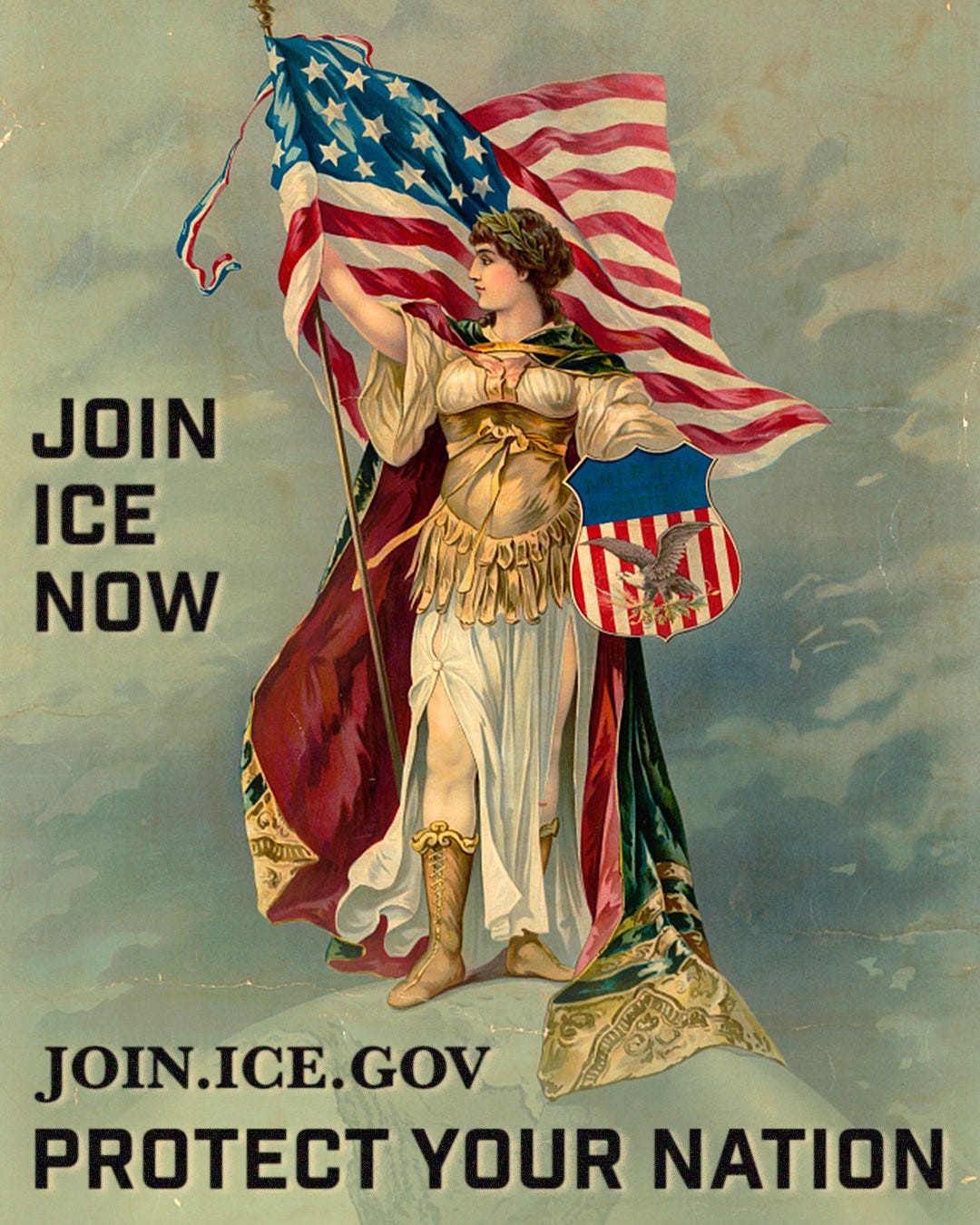
In July 2025, the first group of immigrant detainees arrived to a detention center in Ochopee, Florida. This group included Deferred Action for Childhood Arrivals (DACA) recipients, meaning that their residency in the United States was legal. They were “essentially packed into cages, wall-to-wall humans, 32 detainees per cage.” The detention center was named “Alligator Alcatraz.”4
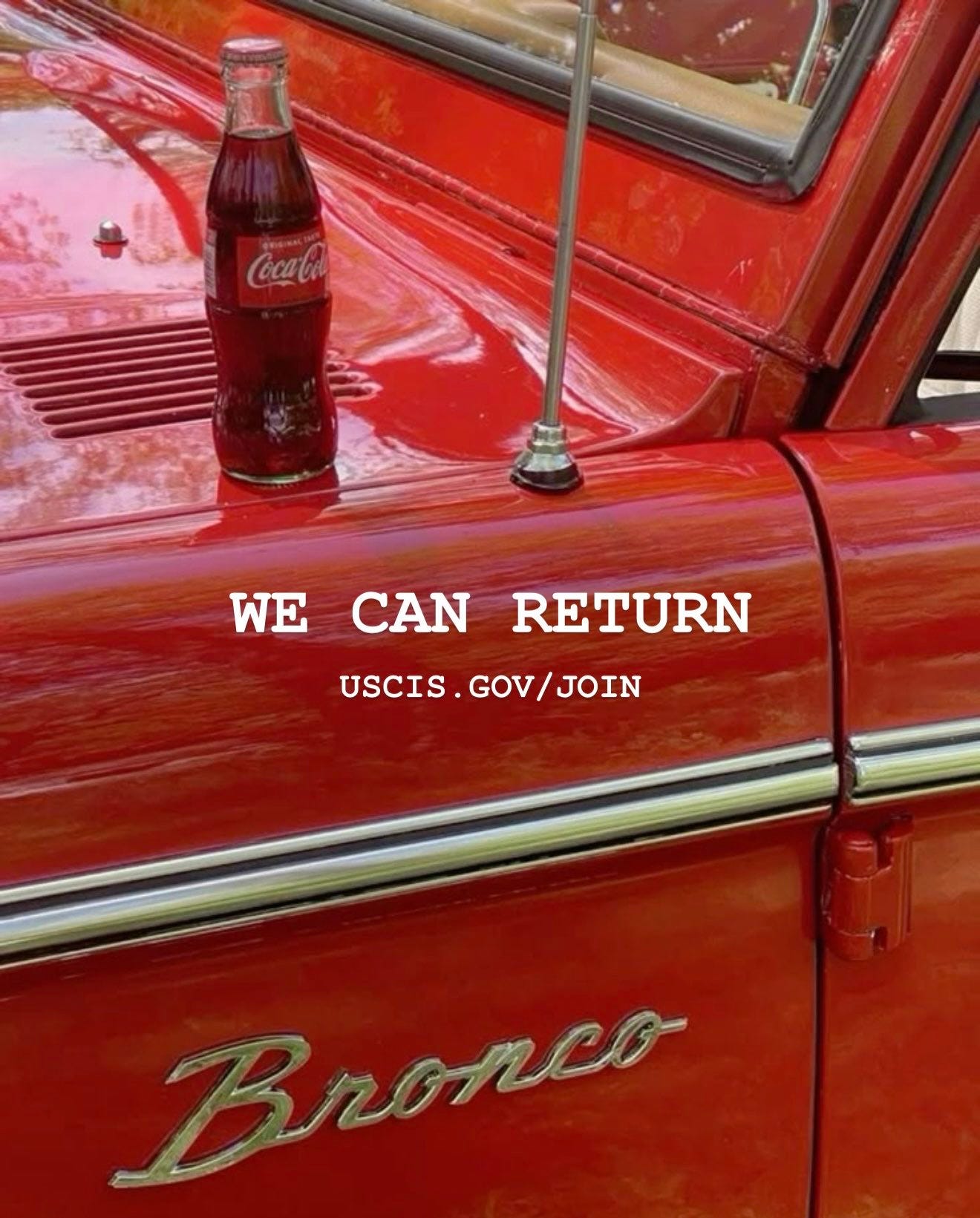
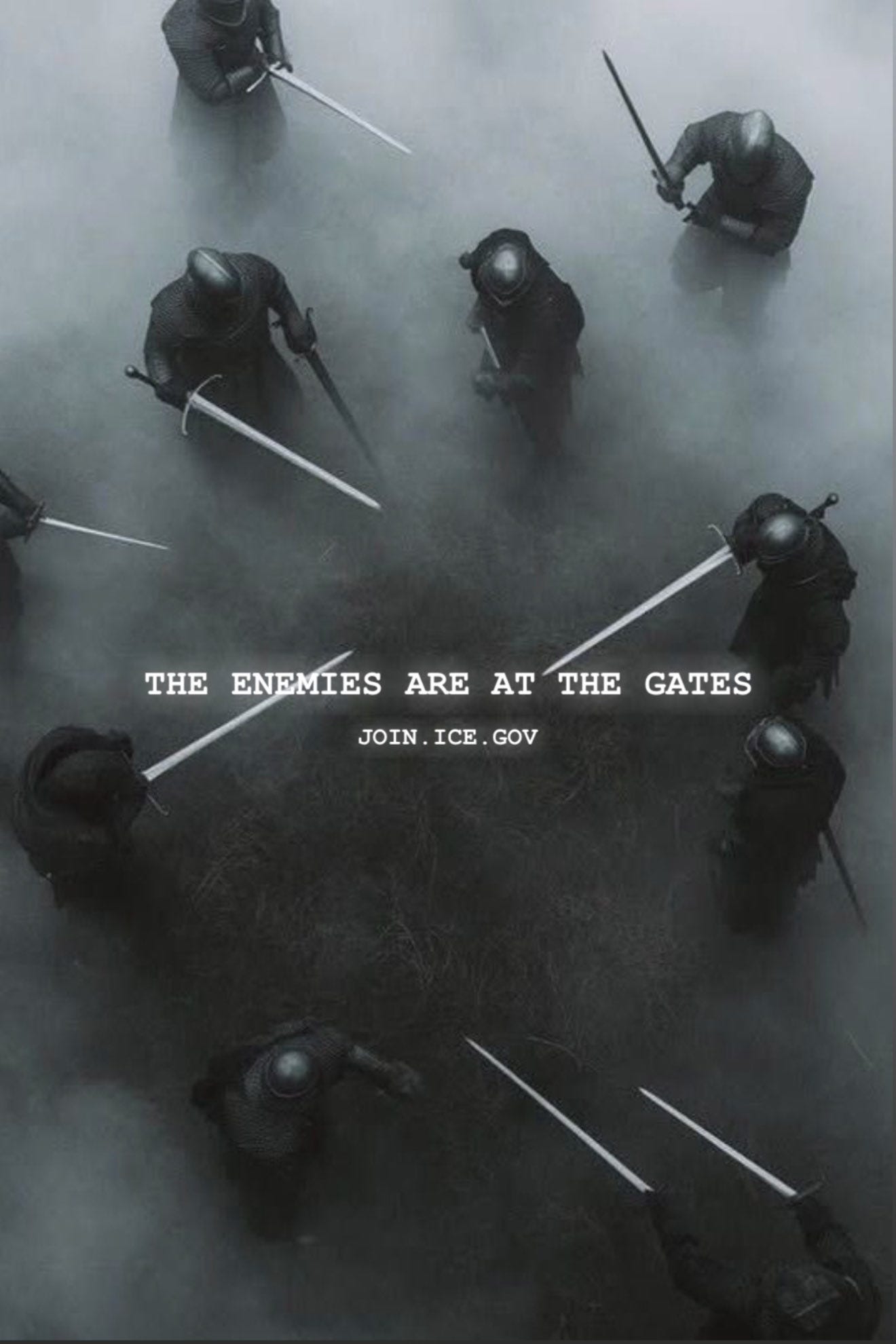
“We’re under invasion from within,” Trump said to a room of high-ranking military generals two months later. “No different than a foreign enemy. But more difficult in many ways because they don’t wear uniforms. At least when they’re wearing a uniform you can take them out. These people don’t have uniforms. But we are under invasion from within. We’re stopping it very quickly.”5
That month, Greg Bovino, the so-called “deportation czar” and tactical commander of mass raid operations in American cities was asked how deportation officers decide whom to approach and rip off the street into unmarked vans.
“It would be agent experience, intelligence that indicates there’s illegal aliens in a particular place or location. Then, obviously, the particular characteristics of an individual, how they look,” he said to the white male reporter. “How do they look compared to, say, you?”6
In October, it was reported that the whereabouts of two-thirds of over 1,800 Alligator Alcatraz detainees could not be determined.
In December, ICE agent Jonathan Ross fired into the windshield of 37-year-old citizen Renee Good’s car in Minneapolis in an altercation described by the Secretary of the Department of Homeland Security as “domestic terrorism.” Medical professionals were prevented from assessing her condition on the scene and she died, the fifth casualty of ICE metropolitan raids so far.
In a recent interview with Reuters, President Trump argued that “we shouldn’t even have an election.” Press Secretary Karoline Leavitt was asked about his remarks during a White House Press Briefing. After calling the journalist a “left-wing hack,” she assured them that the president was, of course, only joking.
The final pages of The Plot Against America, Roth invoke the story of Leo Frank, a Jewish man who in 1915 was accused of the murder of a 13-year-old girl and subsequently arrested and convicted on circumstantial and since-debunked evidence. Following a Supreme Court appeal decision, his sentence was commuted from death to life imprisonment. On August 16, 1915, he was kidnapped from prison by an incensed local gang and lynched at Marietta, Georgia, the girl’s hometown.
“To be sure,” young Philip muses, “the Frank case was only a part of the history that fed my father’s sense of danger in rural West Virginia on the afternoon of October 15, 1942.
“It all goes further back than that.”
I’ve been finding it difficult to write lately. But I managed this, at least. Some exciting announcements soon. Thanks for your patience.
-JSR
“Free America!” The German American Bund at Madison Square Garden, February 20, 1939. Speeches by J. Wheeler-Hill, Rudolf Marman, George Froboese, Hermann Schwinn, G. William Kunze, and the Bund’s Führer: Fritz Kuhn
And would give birth, indirectly, to Paddington Bear, who represented the United Kingdom so singularly he was chosen as the first item to be passed from Graham Fagg to Phillippe Cozette in the newly dug tunnel beneath the English Channel.
Brown, Jeffrey. “Philip Roth Discusses Latest Novel the Plot against America.” PBS News, 27 Oct. 2004, www.pbs.org/newshour/show/philip-roth-discusses-latest-novel-the-plot-against-america. Accessed 18 Jan. 2026.
Bailey, Chelsea, et al. ““Alligator Alcatraz”: What to Know about Florida’s New Controversial Migrant Detention Facility.” CNN, July 2025, edition.cnn.com/2025/07/01/us/what-is-alligator-alcatraz-florida.
Bennett, Brian, et al. “Trump Signals Greater Use of Military in U.S. Cities, Warning of “War from Within.”” TIME, Time, 30 Sept. 2025, time.com/7321940/hegseth-trump-generals-meeting.
Mitchell, et al. “Feds in Military Gear Flood Downtown Chicago; Top Border Official Says Arrests Based on “How They Look.”” Chicago Sun-Times, 28 Sept. 2025, chicago.suntimes.com/immigration/2025/09/28/ice-agents-spotted-downtown-on-michigan-avenue-along-chicago-river.